a man personates a Council, although it clearly does not exist; he uses this pretense to control others of man kind;
- man kind write an Act, deemed to create a Council name and body corporate
- man kind pretend a body corporate exists
- man kind then write policy and planning functions
- a man pretends that he works for the Council, which does not exist;
- a man decides, authorises, and signs for the Council, which does not exist;
- these deeds are falsely attributed to Council, which is a falsehood;
authority
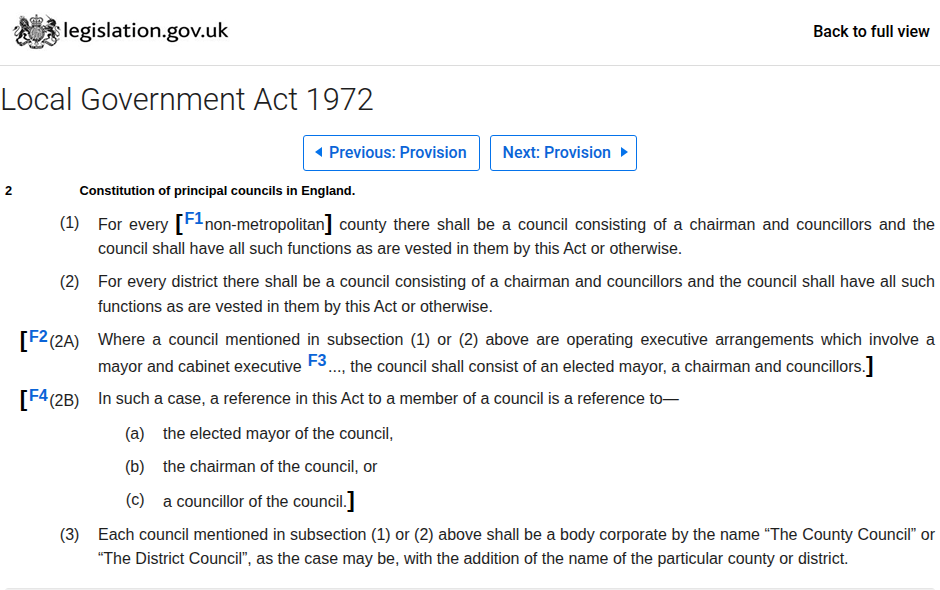
every man or woman who uses the Council-name claims authority through words written by man kind; in Local Government Act 1972 section 2, man kind wrote the Council-name and described it as a body corporate; in the Town and Country Planning Act 1990, man kind wrote planning functions and attributed opinions, decisions, requirements, and enforcement to “the local planning authority”; a man then pretends he works for the Council and uses the authority of the Crown to decide what another man may do upon land; authority can not pass from fiction to reality;
Lysander Spooner wrote this natural-rights argument in 1867; His essential argument was that several men acquire no authority over another man merely by joining together, voting, or adopting a collective name;
“That two men have no more natural right to exercise any kind of authority over one, than one has to exercise the same authority over two. A man’s natural rights are his own, against the whole world; and any infringement of them is equally a crime, whether committed by one man, or by millions; whether committed by one man, calling himself a robber, (or by any other name indicating his true character,) or by millions, calling themselves a government.”
Source: Lysander Spooner, No Treason. No. 1. (Boston: Published by the Author, 1867), section II, p. 7;
fictions: Blackstone
William Blackstone’s lecture plan began in 1753; the following words were printed in Book I of his Commentaries on the Laws of England in 1765;
“Persons also are divided by the law into either natural persons, or artificial. Natural persons are such as the God of nature formed us; artificial are such as are created and devised by human laws for the purposes of society and government, which are called corporations or bodies politic.”
“These artificial persons are called bodies politic, bodies corporate, (corpora corporata,) or corporations.”
Blackstone’s words join artificial person, corporation, body politic, and body corporate; man kind devised the artificial construction through [Crown] human laws; the construction neither devised itself nor does a deed;
Source: William Blackstone, Commentaries on the Laws of England, Book I, chapter I, star page 123, and chapter XVIII, star page 467; the lecture course began in 1753; Book I was printed in 1765;
corporation aggregate
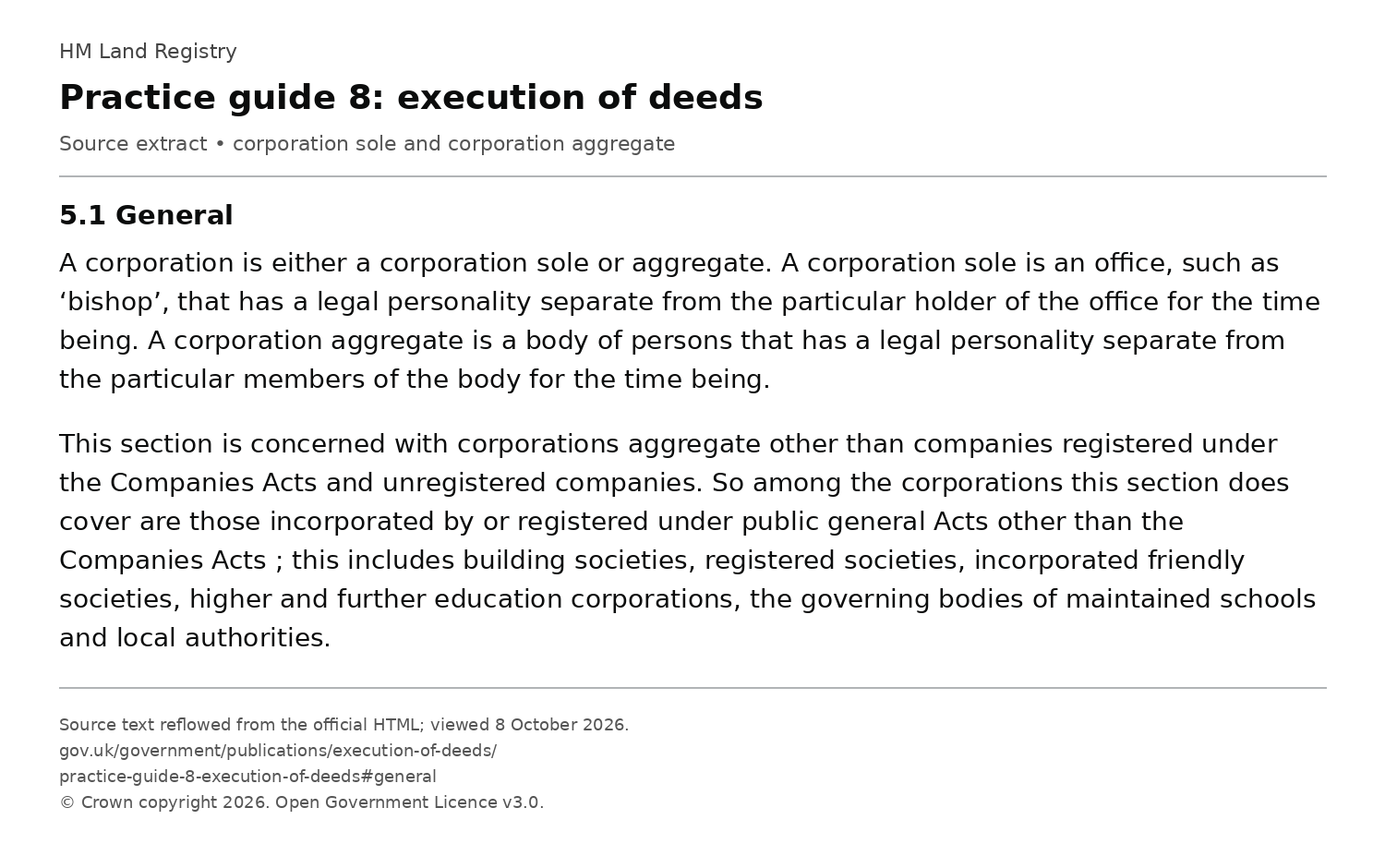
in HM Land Registry practice guide 8, section 5.1, the writers include local authorities among corporations aggregate; they describe a corporate body with a legal personality separate from its current members; they describe a corporation sole as an office, such as ‘bishop’, that has a legal personality separate from the particular holder of the office for the time being
; see the source image for aggregate and sole and Blackstone on corporations aggregate;
Crown copyright
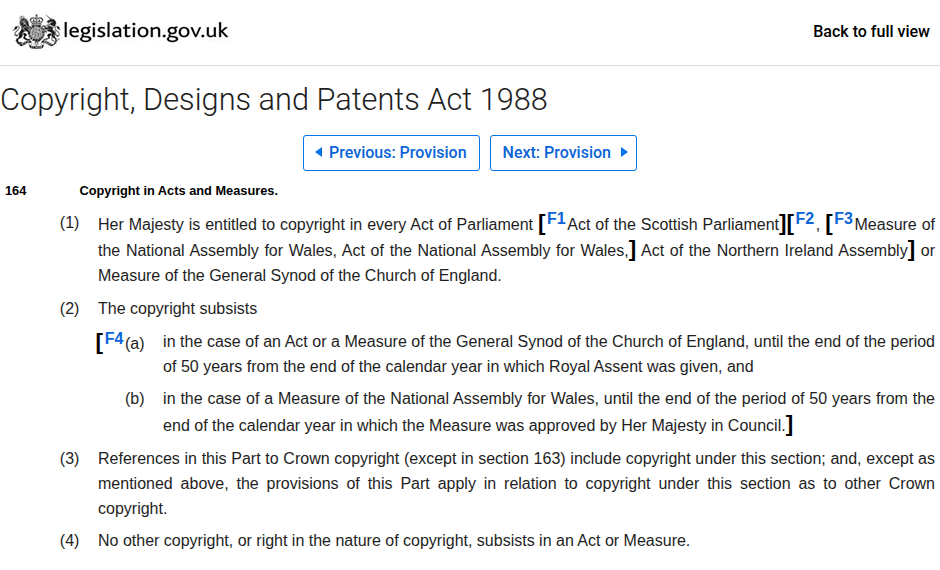
man kind wrote each Act; in Copyright, Designs and Patents Act 1988 section 164, it is written that His Majesty is entitled to copyright in every Act and that the copyright is Crown copyright; man kind thereby attribute the written product to Crown, an abstract concept; fiction can neither own the product, nor pass authority to man kind;
Crown and land
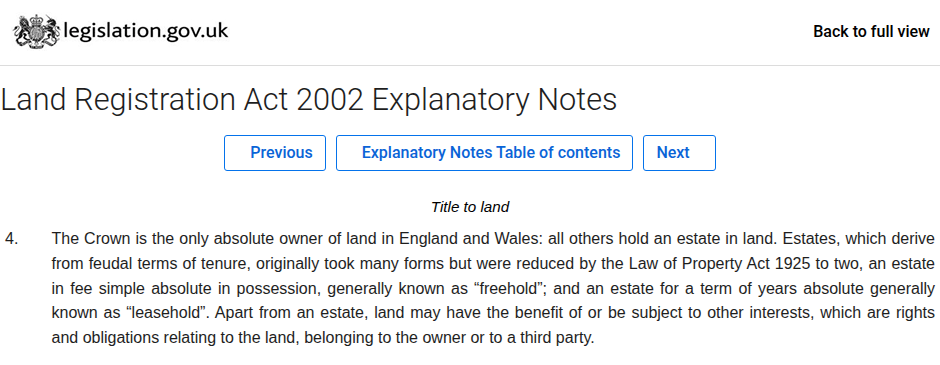
separately, in paragraph 4 of the Explanatory Notes to the Land Registration Act 2002, man kind wrote that Crown is the only absolute owner of land in England and Wales and that all others hold an estate in land; those Notes do not themselves grant planning power, but expose the Crown-and-land premise within which the planning scheme is presented; an abstract concept can neither own land, nor decide what a man may do upon it;
liability is with the man
no Council, local planning authority, Act, body corporate or Crown reads an application, forms an opinion, considers expediency, decides, requires, signs, owns land, or interferes with dominion; a man does all of that; by assuming the Council or planning-officer character he personates it; by writing that “the Council decided”, “the Council considers”, or “the Council requires”, he uses prosopopoeia and falsely attributes his deed to the feigned person; a man decided, authorised and signed, not a fiction;
conclusion
man kind wrote every word above, created every name, formed every opinion, made every decision, authorised every deed and signed every paper; fiction did none of it; for a man to pretend that he gets authority from the Council is at first falsehood; when he knowingly uses that falsehood to mislead another man, it is deceit; when he uses that knowing deceit for gain or to seek an unjust advantage, it is fraud;
evidence ledger
the written source record and source images are kept separate from the application above;
Council-name and body corporate
in Local Government Act 1972 section 2, man kind wrote county and district Councils and described each Council as a body corporate by name;
planning functions
the Town and Country Planning Act 1990 is the immediate written planning layer; the particular paper must identify the exact function, provision, and recorded delegation relied upon;
Crown copyright
in Copyright, Designs and Patents Act 1988 section 164, it is written that His Majesty is entitled to copyright in every Act of Parliament and that the copyright is Crown copyright;
Crown and land
in paragraph 4 of the Land Registration Act 2002 Explanatory Notes, man kind wrote that Crown is the only absolute owner of land in England and Wales and that all others hold an estate in land;
practice guide 8: corporations aggregate and sole
sources
- Local Government Act 1972, section 2;
- Lysander Spooner, No Treason. No. 1. (Boston: Published by the Author, 1867), section II, p. 7;
- William Blackstone, Commentaries on the Laws of England, Book I, chapter I, star page 123, and chapter XVIII, star page 467;
- Town and Country Planning Act 1990;
- Copyright, Designs and Patents Act 1988, section 164;
- Land Registration Act 2002, Explanatory Notes, paragraph 4;
- David Torrance, House of Commons Library, The Crown and the Constitution, 4 August 2025;