a man personates an incorporated company and refers to a piece of paper called CERTIFICATE OF INCORPORATION as evidence that it exists; the paper certificate exists, but the company does not; it is that simple;
scopecompany on this page means an incorporated company under the Companies Act 2006; a limited liability partnership is a separate statutory form considered below under the Limited Liability Partnerships Act 2000; neither meaning concerns the ordinary use of the word company for man kind gathered together;
what is maderegistration is said to bring a company into existence; registration is the making of a paper document called a CERTIFICATE OF INCORPORATION; there is only reality; nothing was formed; there is only a piece of paper;
a man has been sold a piece of paper, the deed the man now does is to pretend the piece of paper is special;

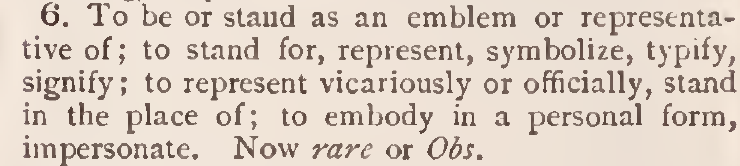
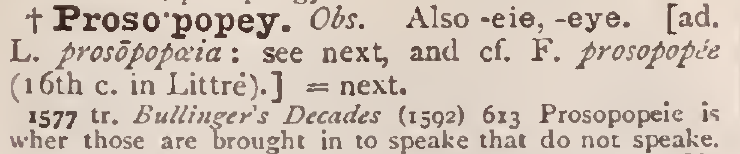
the Royal starting point
the authority claimed for company formation has a royal starting point: the king, whom Blackstone classed as a Corporation Sole; that corporate character is an idea devised by man kind, used to attribute continuing rights and duties to the royal office;
Maitland's criticismof the ecclesiastical Corporation Sole, Maitland used the words “juristic abortion”; he described applying the same construction to the king as “still more abortive and infinitely more mischievous”;
the objection herethe process records and enforces an attribution of rights and title; it describes no physical transfer of land or goods into an idea; the objection here is to treating words and seals as giving that idea the capacity to own real things — the stuff of a magical children's book; see the sources and the distinction below;
Company formation: man kind deliver an application, memorandum, and statement of compliance, on paper or electronically; a man using the registrar role records those documents and makes another document called a CERTIFICATE OF INCORPORATION; yet, it is only a piece of paper;
the result: a paper called a CERTIFICATE OF INCORPORATION exists; words on paper can never bring something into existence;
deceit begins when a man pretends he has a company to work for;
fraud is likely to begin when the man uses the paper called a CERTIFICATE OF INCORPORATION for gain or advantage over another man;
see the distinction between body corporate and body politic and the history of artificial persons;
Crown and the authority for incorporation
Blackstone attributed the erection of corporations in England to the king's express or implied consent; he included incorporation through an Act of Parliament because royal assent formed part of that route; the parliamentary route is the connection to company formation by registration; [1]
for a company formed under the Companies Act 2006, the documented constitutional connection is Crown-in-Parliament: the sovereign, Lords, and Commons participating in enactment; man kind then apply the formation provisions through the appointed registrar; the earlier registration machinery was administered through a committee of Her Majesty's Privy Council; [2] [3]
man kind retain powers to enforce filing and fee requirements, strike a company off the register, and disqualify a director on specified grounds; these are evidence of continuing control over corporate status and its use; share ownership is recorded separately, while remaining company property is attributed to the Crown or the specified duchy interests upon dissolution; [4] [5] [6]
the distinctionthe documented chain concerns authority for incorporation and its administration; ownership, the justification for that authority, and the basis of a particular obligation asserted against another man require their own evidence;
sense and non sense
working useon this page, non sense names a sentence where 'the Company' is never present, and can not be found with any sense;
the Company name can be read; the CERTIFICATE can be seen; the register can be stored; 'the Company' does not exist, it is non sense;
limited liability partnership
sourcein section 1(2) of the Limited Liability Partnerships Act 2000, it is written that a limited liability partnership is “a body corporate (with legal personality separate from that of its members)” formed by being incorporated under this Act; in section 2 and section 3 it is written that subscribers put their names to an incorporation document, information is delivered to the registrar, the documents are registered, and a certificate of incorporation is given;
what can be foundthe subscriber names, delivered information, register entry, and certificate can be found; there is only reality; no LLP appears;
agency recordin section 6(1), man kind wrote: “Every member of a limited liability partnership is the agent of the limited liability partnership”;
applicationevery man who claims to represent an LLP and presents the LLP as the doer maintains the falsehood; once he has notice, knowingly continuing the falsehood to mislead another man is deceit; using that false representation to obtain an unjust advantage or injure another man's rights or interests is fraud (OED);
liabilityin subsection 6(4) it is written that, where a member is liable to a person other than another member as a result of his own “wrongful act or omission” in the course of the LLP business or with its authority, the LLP is liable to the same extent; membership alone does not make every member personally liable for every LLP debt or a deed attributed to another member;
conclusionlegal liability and physical cause are different;
cause never leaves the man
a man does the deed; wrong doing is determined from the deed and evidence;
| falsehoods | feigning of person |
|---|---|
| “the company decided” | prosopopoeia; man kind decided; the decision was attributed to the company; |
| “the company signed” | prosopopoeia; a man signed in the company name or on its behalf; |
| “the company knew” | prosopopoeia; a man's knowledge was attributed to the company; |
| “i own the company” | prosopopoeia; a man claimed ownership of the company; |
| “i am a director” | personation; a man claimed a director role; |
| “i work for the company” | prosopopoeia; a man claimed that he worked for the company; |
| “you owe the company £100” | prosopopoeia; a man claimed that another man owed the company £100; |
false dealing
the boundary:without assent of either man, personation is false dealing, which is wrong doing, and once noticed will become fraud if used for gain or advantage;
the non sense begins when words present 'the Company' as though it is an independently existing being; personation of 'the Company' may hide the man who acted, yet it is always a man who speaks, writes, signs, decides, or does the physical deed;
a man does deceit when he knowingly uses an untrue statement, false appearance, or a concealed fact with the purpose that another man be misled; where he uses the deceit to seek gain, payment, compliance, control, something not due, and the result is hurt, damage, or loss, the wrong is fraud; without remedy, the wrong will become trespass; see fraud;
conclusion
companies do not exist;
there is only reality; a paper or electronic record can be read, but no company can be found as an independent living body; a company can never be present, it is non sense; cause never leaves the man who did the deed; legal liability must be determined separately from the particular deed and source record;
evidence ledger
the source record, legal effects, and supporting distinctions are kept below; they do not alter the observable sequence stated above;
formation, registration, certificate, and register
the following is the source record in the current Companies Act 2006; it is kept separate from the conclusion drawn on this page;
formation
section 7 says one or more persons form a company by subscribing their names to a memorandum and complying with registration requirements; section 9 requires the memorandum, application, accompanying documents, and statement of compliance to be delivered to the registrar;
registration and certificate
section 14 directs the registrar to register the delivered documents when satisfied that the requirements are met; section 15 directs the registrar to give a signed or sealed certificate stating the name, registered number, incorporation date, whether limited or unlimited and, if limited, whether by shares or guarantee, whether private or public, and the registered-office jurisdiction; the certificate is written as conclusive evidence that the registration requirements were met;
legal effect
section 16 gives registration its effects from the date of incorporation; it describes the subscribers and later members as “a body corporate by the name stated in the certificate of incorporation” and gives that body the functions of an incorporated company;
source boundaryfor the Companies Acts, in section 1173 it is written that “body corporate” and “corporation” do not include a corporation sole; body politic is not the opposite category and its historical or political use depends upon context; see the full distinction and examples;
the register
section 1080 requires the registrar to keep information from delivered documents and issued certificates; those records are collectively called the register, and information may be kept electronically;
the distinctionregistration produces the legal status and consequences written by man kind; the Act does not describe the appearance of another living or physical body;
LLP: incorporation, members, agency, and liability
the following is the source record in the current Limited Liability Partnerships Act 2000 and current official guidance; it is kept separate from the working conclusion drawn on this page;
statutory form
in section 1, man kind wrote of a new form of legal entity, described it as a body corporate with legal personality separate from its members, wrote that it has unlimited capacity, and wrote that ordinary partnership law does not apply except where this Act or another enactment provides otherwise;
incorporation and certificate
in section 2 it is written that two or more persons associated for lawful business with a view to profit subscribe an incorporation document and deliver the document and required statements and information; in section 3 it is written that the documents are registered and a certificate is given; the certificate is conclusive evidence of compliance with section 2 and incorporation by the recorded name;
members and agreement
in section 4 it is written that the subscribers are the first members and that another person may become a member in accordance with an agreement with the existing members; in section 5 it is written that the mutual rights and duties are governed by agreement or, where no agreement covers the matter, by provisions made in regulations;
agency and liability
in section 6, man kind wrote that every member is the agent of the LLP; in subsection 6(2) it is written that the LLP is not bound in the stated absence-of-authority circumstances; in subsection 6(4) it is written that, where a member is liable to a person other than another member as a result of his own wrongful act or omission in the course of the LLP business or with its authority, the LLP is liable to the same extent;
designated members and identity record
in section 8 it is written how designated members are recorded and that every member becomes designated if there would otherwise be fewer than two; in the current Companies House LLP guide, updated 1 February 2026, man kind record the additional filing duties and current identity-verification requirements, including verification of individual members;
company, partnership, and insolvency rules
in section 14(1) it is written that regulations shall apply or incorporate the specified insolvency and winding-up law with appropriate modifications; in section 14(2) and section 15 it is written that regulations may apply, exclude, or modify other insolvency, company, corporation, or partnership rules; the Companies House guide records partnership-style organisation and taxation while distinguishing an LLP from an ordinary partnership and a limited company;
the legal distinctionan LLP member is not personally liable merely because an LLP debt exists or a wrong is attributed to another member; a man may nevertheless become personally liable through his own wrongful deed, a guarantee, an agreement, or another particular rule; under the wording in section 6(4), liability may rest upon both the member and the LLP;
historical evidence: the word, registration, and sale
the records below distinguish the ordinary word company, an unincorporated association, and an incorporated company; they show 1844 as the year of establishment and 13 Serjeant’s Inn, Chancery Lane, London as what is the modern day Companies House;
before 1844: company and partnership
in the National Archives guide to companies and businesses, it is recorded that before the Joint Stock Companies Act 1844 incorporation was possible only by Royal Charter or a private Act of Parliament, and that registration became the predominant method after 1844;
in ITH301 and ITH302, reproduced in HMRC’s International Manual, it is written that when income tax reappeared in 1842 there were few true trading corporations; man kind used partnerships or an “unincorporated company”, described there as a “half-way house between a corporation and a partnership”;
in ITH302 it is also written: “The word ‘company’ has no precise legal meaning and is still loosely applied to partnerships”; in the next sentence it is written that the tax definition then under discussion expressly excluded a partnership;
source boundarythe International Tax Handbook containing those words was withdrawn in October 2008; HMRC reproduce it for its historical account and company-residence guidance, so the quoted word still is not a fresh statement made in 2026 and the passage is not a current statutory definition;
1844: registry office and incorporation
in sections I, XIX, and XX of the Joint Stock Companies Act 1844 it is written that the provisions for registration officers and regulation of the office came into operation immediately upon the passing of the Act on 5 September 1844; the other provisions came into operation on 1 November 1844; man kind provided for appointment of a Registrar of Joint Stock Companies and attendance at the office;
in the official Companies House history, man kind record 1844 as its year of establishment and 13 Serjeant’s Inn, Chancery Lane, London, as its first location;
within the stated scope and exceptions, in section II the expression “Joint Stock Company” comprehended a partnership whose capital was divided into transferable shares without every copartner’s express consent and a partnership containing more than twenty-five members; in section XXV it is written that complete registration certified by the registrar incorporated the company, its then shareholders, and succeeding shareholders from the certificate date, without restricting shareholder liability;
1855: limited liability
in sections I and II of the Limited Liability Act 1855 it is written that a joint stock company meeting the stated conditions could obtain a certificate of complete registration with limited liability;
1856: general registered form
in sections II and III of the Joint Stock Companies Act 1856 it is written that seven or more persons associated for a lawful purpose could, by subscription to a memorandum and compliance with registration requirements, form an incorporated company with or without limited liability; section II excluded association for banking or insurance;
1862: consolidation and registration
in the preamble to the Companies Act 1862, it is written that the laws concerning incorporation, regulation, and winding-up of trading companies and other associations were to be “consolidated and amended”; in section 4 it is written that a gain-seeking company, association, or partnership exceeding the stated number could not be formed after commencement unless registered or otherwise incorporated within the stated exceptions;
in section 6 it is written that seven or more persons associated for a lawful purpose could form an incorporated company by subscribing a memorandum and complying with registration requirements; in section 18 it is written that registration made the subscribers and later members a body corporate by the memorandum name, with perpetual succession and a common seal;
1890: the partnership boundary
in section 1 of the Partnership Act 1890, partnership is defined as the relation between persons carrying on a business in common with a view of profit; in subsection (2) it is written that the relation between members of a company or association registered under the Companies Act 2006, or formed or incorporated by or under another enactment, letters patent, or Royal Charter, is not a partnership within that definition;
1896, reported 1897: company and subscribers
in the judgments delivered in Salomon v A Salomon & Co Ltd [1896] UKHL 1, [1897] AC 22, it is written that after incorporation the company was “a different person altogether from the subscribers to the memorandum”; this records a legal consequence of incorporation and does not make every association called a company into a corporation;
current words: the context controls
for the Companies Acts, in section 1 of the Companies Act 2006, company means a company formed and registered under the stated current or predecessor provisions, unless the context otherwise requires;
for the Corporation Tax Acts, in section 1121 of the Corporation Tax Act 2010, company means a body corporate or unincorporated association but expressly excludes a partnership and the other listed bodies; for the particular contract exclusion in Schedule 1, paragraph 1(d), of the Unfair Contract Terms Act 1977, company is instead given a meaning that includes a partnership;
source boundaryeach definition operates within its stated provision and context; the special inclusion of a partnership in one provision does not make every partnership a company or an incorporated body;
1981: shelf companies recorded as sold
in Hansard for 19 October 1981 it is recorded that shelf companies were promoted by specialist firms and that persons acted as their directors until they were “sold and begin to trade”; this is documentary evidence of the practice by 1981, not its first year;
6 April 2001: LLP commencement
in article 2 of the Limited Liability Partnerships Act 2000 (Commencement) Order 2000 it is written that the Limited Liability Partnerships Act 2000 came into force on 6 April 2001; this establishes the commencement date, not the date of a first ready-made LLP sale;
seller and registrar
in the current HMRC record of off-the-shelf sales, the seller is recorded as a formation agent or other trust or company service provider, and the firm is recorded as already registered at Companies House before the customer buys it; sale and registration are recorded as different events;
the source boundarythe older records show that the word company and a partnership form could overlap before incorporation; they do not make a partnership an incorporated company under the current Companies Acts; the 1844 record establishes the registry office, registrar role, and incorporation by complete registration; the 1855 and 1856 records establish limited-liability and registration milestones; in the 1862 record it is written that the developing rules were consolidated and amended; the 1890 record distinguishes the statutory relation of partnership; Salomon records the separate-person consequence of incorporation; the 1981 record establishes shelf-company sale by that date; 6 April 2001 establishes commencement for LLP incorporation;
Crown: incorporation, continuing control, and property on dissolution
the sequence below connects Blackstone's historical account with the registration offices and procedures recorded in legislation; historical provisions and current provisions are identified separately;
1. Blackstone: royal consent and Parliament
in Commentaries on the Laws of England, Book I, chapter XVIII, star pages 472–474, Blackstone wrote that “none but the king can make a corporation”; he attributed incorporation in England to express or implied royal consent;
his express routes were an Act of Parliament and a royal charter; when discussing the parliamentary route, he wrote that “the royal assent is a necessary ingredient”; he also described Parliament incorporating classes of charitable foundations directly;
the common-law route rested on supposed concurrence of former kings, and the prescription route on a presumed former charter; these are the kinds of consent in his account; see the passages and distinctions in Blackstone and the delegated incorporation passage;
2. 1844: the registrar and the Privy Council
in section III of the Joint Stock Companies Act 1844, the Committee of Privy Council for Trade was identified as the Lords of the Committee of Her Majesty's Privy Council concerned with trade and plantations;
in section XIX, provision was made for that committee to appoint the registrar, retain him at its pleasure, and regulate his office; commissioners of Her Majesty's Treasury fixed remuneration;
in section XXV, incorporation followed the registrar's certification of complete registration; this is the historical administrative connection between the registration process and royal government;
3. 2006: enactment, appointment, and registration
in the enactment formula, the Queen, the advice and consent of the Lords and Commons, and the authority of Parliament are recorded; Crown-in-Parliament names that constitutional arrangement;
in Hansard for 8 November 2006, the Speaker reported the reading of a commission under the Great Seal authorising royal assent to the listed Acts, including the Companies Act 2006;
in section 1060(2), appointment of the registrars is assigned to the Secretary of State; in Schedule 1 to the Interpretation Act 1978, Secretary of State means one of the sovereign's Principal Secretaries of State;
in sections 7–8 and sections 14–16, the subscription, registration, certificate, and resulting corporate status are recorded; for this route, royal participation occurs in enactment of the general scheme, which the registrar applies to individual formations;
4. annual filing, fees, and strike-off
in section 853A, provision is made for confirmation statements after each review period; in section 1063, provision is made for fees, with fees received by the registrar paid into the Consolidated Fund;
in section 1072, fee payment is among the proper-delivery requirements, subject to the registrar's acceptance power in section 1073; in Companies House guidance, the annual fee is payable with the first confirmation statement in a twelve-month payment period;
in section 1000, a registrar with reasonable cause to believe a company is no longer carrying on business or in operation may pursue strike-off through the specified inquiry and notice procedure; dissolution follows publication of the final notice in the Gazette;
these are continuing requirements and enforcement powers; a missed annual payment alone does not automatically dissolve a company or disqualify its director;
5. disqualification of a director
in section 3 of the Company Directors Disqualification Act 1986, provision is made for a judge to make a disqualification order for persistent defaults involving specified company-law requirements, including filing duties;
the grounds and procedure concern the person against whom the order is sought; this is a separate proceeding from striking a company off the register; the recorded power is evidence of control over who may undertake company management;
6. property on dissolution and share ownership
in section 1012, remaining company property and rights are deemed bona vacantia upon dissolution and attributed to the Crown, the Duchy of Lancaster, or the Duke of Cornwall for the time being, as applicable;
property held by the company on trust for another is excluded; the provision is expressly subject to possible restoration of the company to the register;
shareholding is recorded separately: in section 16(5), subscribers become holders of the shares specified in the initial shareholding statement; the Crown property provision concerns dissolution and does not establish Crown ownership of every company throughout its operation;
what this establishesman kind record a constitutional and administrative chain for incorporation, continuing requirements, powers of enforcement, and the attribution of remaining property upon dissolution; the justification for exercising authority over a particular man, and the evidence for a particular debt or duty, remain separate questions;
Corporation Sole: Maitland, parchment, and the claimed recipient
Maitland's source wordsthe first quotation above concerns the ecclesiastical Corporation Sole at the close of The Corporation Sole (1900), PDF page 114; the second concerns its application to the king in The Crown as Corporation (1901), PDF page 118; both are collected in Collected Papers, volume III;
in the first passage, Maitland's criticism concerned a construction which had failed to solve the succession problem concerning the parson and the glebe; in the second, he criticised the king's two-bodies theory and explained that the separation of royal and private property had required legislation; see the existing extracts on parson and Crown;
Blackstone on parchment and dominionin Book II, chapter I, star page 2, Blackstone wrote: “there is no foundation in nature or in natural law, why a set of words upon parchment should convey the dominion of land”; see the passage and its context on property;
source and argumentBlackstone was examining the foundation of property rights; Maitland was criticising particular juristic constructions; the comparison with the words and seals of a children's book is the argument made on this page; legal conveyance concerns the allocation of rights and title, while physical custody and use concern deeds of man kind; the question raised here concerns the supposed recipient of the attribution;
what the record does and does not create
before registration there are man kind, documents, computers, and other material things; after registration the observable world contains the delivered records, a certificate or its electronic record, man kind, and material things; no additional living body appears;
sections 7 to 16 record persons, names, subscription, delivery, registration, certification, and legal effects; they do not record the birth or appearance of another being; no company-body begins to breathe, no company-mind begins to think, and no company-voice begins to speak;
section 16 describes subscribers and later members as a body corporate by the registered name; that is an imaginary body, not a body in nature;
Companies House, Blackstone, and court records
in a guide published by Companies House, man kind describe incorporation as registration of a limited company, call the company a legal entity with a separate identity, and write that incorporation has no legal effect until the certificate is issued; man kind also record documents, names, officers, addresses, statements, checks, and entries on the public record;
devised
William Blackstone, a man, wrote in Commentaries on the Laws of England, Book I, star page 123, that artificial persons are “created and devised by human laws for the purposes of society and government” and are called corporations or bodies politic;
the words record man kind devising a construction; they do not record another natural being;
fiction
in Prest v Petrodel Resources Ltd, [2013] UKSC 34, paragraph 8, Lord Sumption writes that separate corporate personality and property are:
“sometimes described as a fiction, and in a sense it is”;
he also records that the fiction is foundational to English company and insolvency law; legal effect does not turn the fiction into a natural being;
non-natural
in Jetivia SA v Bilta (UK) Ltd, [2015] UKSC 23, paragraphs 180 and 183, man kind wrote this warning:
“avoid the dangers of ascribing human attributes to a non-natural person such as a company”;
the same reasons explain that a company operates only through acts of officers, employees, and agents;
treated and attributed
in Lifestyle Equities CV v Ahmed, [2024] UKSC 17, paragraphs 34 to 37, man kind wrote that a company is “treated in law” as a separate person and explained the rules by which deeds of individuals are attributed to it;
attribution does not make the deed cease to be the deed of the individual who actually did it;
- a man or woman does the deed
- man kind use a rule to attribute the deed and legal consequences to the body corporate under the name
- the attribution does not erase or transfer the cause
contracts, signatures, and natural person
even the Act points to man kind
- section 43 permits a contract to be made on behalf of a company by a person acting with authority;
- section 44 provides for a document to be signed on behalf of a company by authorised signatories or by a director before a witness;
- section 51 generally puts a purported pre-formation contract upon the person who purported to act;
- section 155 requires at least one director to be a natural person;
sources
- HMRC, INTM120210, including ITH301–304; The National Archives, Companies and businesses;
- Joint Stock Companies Act 1844, sections I, II, XIX, XX, and XXV; Companies House, What is Companies House?; Limited Liability Act 1855, sections I and II; Joint Stock Companies Act 1856, sections II and III; Companies Act 1862, preamble and sections 4, 6, and 18; Partnership Act 1890, section 1;
- Hansard, 19 October 1981, New Clause 23; HMRC, ECSH52175: Company formation and sale of off-the-shelf firms;
- Companies Act 2006, section 1; section 7; section 9; section 14; section 15; section 16; section 1173;
- Corporation Tax Act 2010, section 1121; Unfair Contract Terms Act 1977, Schedule 1, paragraph 1(d);
- Companies Act 2006, section 43; section 44; section 51; section 155; section 1080;
- Limited Liability Partnerships Act 2000, section 1; section 2; section 3; section 4; section 5; section 6; section 8; section 14; section 15; Limited Liability Partnerships Act 2000 (Commencement) Order 2000, article 2;
- Companies House, Incorporation and names, updated 25 June 2026;
- Companies House, Limited liability partnerships: incorporation and names, updated 1 February 2026; HMRC, VATREG09600: Limited Liability Partnerships, updated 29 July 2026;
- Prest v Petrodel Resources Ltd, [2013] UKSC 34, paragraph 8;
- Jetivia SA v Bilta (UK) Ltd, [2015] UKSC 23, paragraphs 180–185;
- Lifestyle Equities CV v Ahmed, [2024] UKSC 17, paragraphs 34–40;
- Salomon v A Salomon & Co Ltd [1896] UKHL 1, [1897] AC 22;
- William Blackstone, Commentaries on the Laws of England, Book I, star page 123;
- Corporation Sole and the royal starting point: Blackstone, Book I, chapter XVIII, star pages 469 and 480; the king's corporate character; incorporation and endowment; Maitland, Collected Papers, volume III, PDF page 114 and PDF page 118; Blackstone, Book II, chapter I, star page 2, parchment and dominion;
- Crown and incorporation: William Blackstone, Commentaries on the Laws of England, Book I, chapter XVIII, star pages 472–474; royal consent and the parliamentary route; delegated incorporation;
- historical administration: Joint Stock Companies Act 1844, sections III, XIX, and XXV;
- current formation authority: Companies Act 2006, enactment formula; Hansard, 8 November 2006, royal assent; section 1060(2), appointment of registrars; Interpretation Act 1978, Schedule 1, Secretary of State;
- continuing requirements: Companies Act 2006, section 853A, section 1063, section 1072, section 1073, and section 1000; Companies House, confirmation statement guidance; Company Directors Disqualification Act 1986, section 3;
- property and shareholding: Companies Act 2006, section 1012 and section 16(5);