the register and Crown;the fiction behind the title;
England and Wales;
Crown as authority
a man claims Crown is the absolute owner of land and, as lord paramount, has dominion over it;
in the 2002 explanatory notes, man kind wrote: The Crown is the only absolute owner of land in England and Wales
; at paragraph 128, they attributed dominion to Crown as lord paramount; source;
man kind describe Crown as a Corporation Sole, with continuity attributed to the office through successive occupants; it is absurd; source;
Crown is a fiction, and can not have dominion of anything real; there is no mechanism for something imaginary to crossover to reality;
the Crown relationships in the register
HM Land Registry
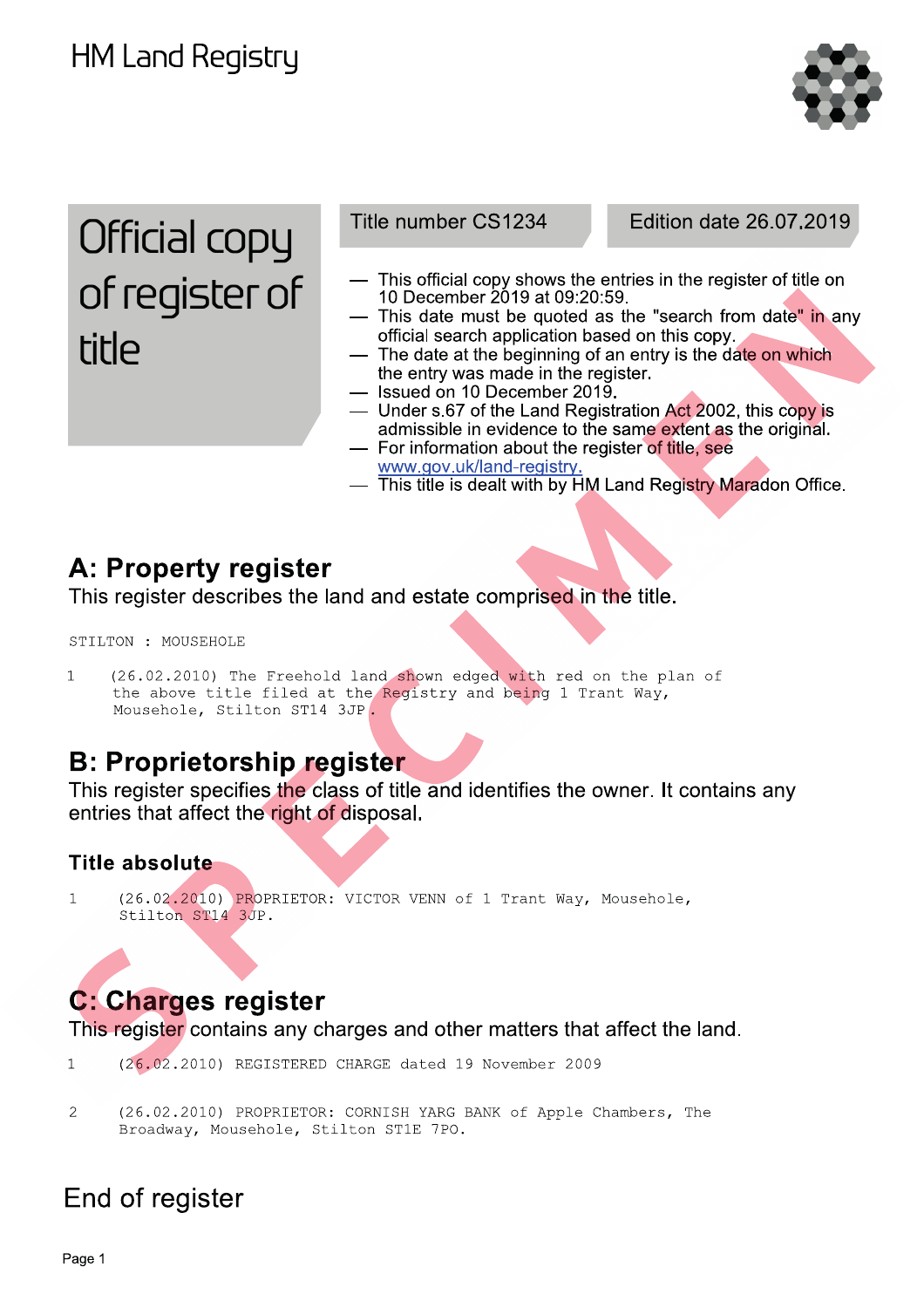
man kind use His Majesty in the registry’s name; the connection is to Crown in official capacity, described as a Corporation Sole and an artificial person; man kind keep and alter the register;
A: the estate in land
what is registered here is title to an estate in land; the estate is the legal interest held in the land, described as freehold or leasehold; source;
in the tenure account, that estate is held ultimately of Crown, described as lord paramount; a leasehold estate is held under a landlord within that structure; man kind place Crown, an artificial person, at its head; tenure and the registered estate; source;
Uniquely, the Crown has dominion over all land as lord paramount.
— Land Registration Act 2002 explanatory notes, paragraph 128;
B: title absolute; proprietor of the estate
title absolute is the class of title to the estate; absolute owner is the description attributed to Crown; source;
the registered proprietor is named as owner of the estate; that estate remains within the tenure account, with ultimate ownership of the land attributed to Crown, the artificial person; the written ownership premise;
The estate is vested in the proprietor together with all interests subsisting for the benefit of the estate.
— Land Registration Act 2002, section 11(3), registration with absolute title;
C: the charge against the estate
man kind enter the mortgage charge against the registered estate; the estate is held within the tenure account whose ultimate superior is described as Crown, an artificial person; a corporate lender is another artificial person, distinct from Crown; the connection is charge → registered estate → tenure from Crown; source;
power to charge the estate at law with the payment of money.
— Land Registration Act 2002, section 23(1)(b);
the register, plan and address data: Crown copyright
in the publication scheme, most supplied documents are described as Crown copyright; Crown copyright is also attributed to mapping and address material, subject to separate licensing arrangements; here the attribution concerns the record or map; source;
the specimen has no visible copyright line; the source for this connection is the publication scheme;
the fiction does no deed
a man uses the entry to claim authority over land and man kind through a fictitious hierarchy, with Crown at its head; the entry does not turn that fiction into reality; when he uses that false claim to justify interference with another man or his land, he does an unlawful deed;
sources
source wording and this page’s analysis are distinguished above;
Crown; lord paramount; estates
in the Land Registration Act 2002 explanatory notes, paragraph 4 concerns the absolute ownership attributed to Crown and the estates held by others; the writers trace those estates to feudal terms of tenure; at paragraph 128, Crown is described as lord paramount; see the written ownership premise and the tenure comparison;
in section 79(1), it is written: Her Majesty may grant an estate in fee simple absolute in possession out of demesne land to Herself.
the estate is then to be registered; the land and the registrable estate are distinguished;
Crown; the artificial person; the royal-grant fiction
in section 180(1) of the Law of Property Act 1925, man kind wrote a corporation sole (including the Crown)
in the provision concerning property and succession; this is the express property connection already recorded on Crown and property;
in X v The Lord Advocate [2025] UKSC 44, paragraphs 40–42, the writers describe Crown as a Corporation Sole and distinguish the Sovereign’s official and private capacities; at paragraph 40, they reproduce the explanation that the royal style generally personifies Crown’s powers in constitutional usage; their context is the Crown Proceedings Act 1947;
in Blackstone, Book I, chapter XVIII, *467–470, corporations are classified as artificial persons; King is included in his account of Corporation Sole;
Blackstone called the supposed derivation of every parcel from a royal gift in reality a mere fiction
— Book II, chapter IV, *51; his statement concerns that supposed origin; the later attribution to Crown is examined on feudal;
Maitland examined corporate succession and the gradual substitution of Crown for King or Queen in The Crown as Corporation (1901), Collected Papers, volume III, PDF pages 115–121;
His Majesty; the registry’s name and the royal office
in the 2002 wording of section 99, man kind named the office Her Majesty’s Land Registry and specified the Chief Land Registrar and staff; in the 2026 framework document, paragraphs 1.1 and 3.2, they use His Majesty’s Land Registry and classify it as a non-ministerial department;
in section 10 of the Interpretation Act 1978, references to the reigning Sovereign are to be read as references to the Sovereign for the time being, unless a contrary intention appears; this explains the current His Majesty wording without changing the earlier quotation;
the Corporation-Sole evidence concerns Crown and the Sovereign in official capacity; section 99 identifies the registration office; the registry’s name alone is not evidence that the Chief Land Registrar or the registry is itself a Corporation Sole; see Crown and its styles;
the estate; proprietor; title absolute
in section 2(a)(i) of the Land Registration Act 2002, man kind specify registration of title to an estate in land; the wider list also includes other registrable interests; the A, B and C explanation above concerns the estate shown in the specimen;
the two legal estates are specified in section 1 of the Law of Property Act 1925; in the Land Registry explanation, legal owners of the estate are called registered proprietors;
absolute title is addressed in sections 9 and 10 of the Land Registration Act 2002; the interests to which it remains subject are specified in sections 11 and 12;
in section 58(1), it is written that an estate not otherwise vested in the registered proprietor shall be deemed to be vested in him as a result of the registration
; subsection (2) contains a qualification; this is the legal effect attributed to the entry;
the charge against the estate
in section 23 of the Land Registration Act 2002, man kind describe the power to charge the registered estate and distinguish powers relating to the estate from those relating to the charge; the Crown connection is through the estate described in the tenure account;
Crown copyright in the record and mapping
in section 163 of the Copyright, Designs and Patents Act 1988, first ownership of copyright in qualifying official works is attributed to the royal designation;
in the HM Land Registry publication scheme, most supplied documents are described as Crown copyright; mapping and address material can have separate licensing arrangements; third-party material may have other copyright;
the specimen
HM Land Registry, official copy of a register — specimen; the image above reproduces the full page, including its invented example entries;